

As medical librarians, we teach library users the information skills they’ll use to practice evidence-based medicine throughout their careers – and then we wave goodbye at graduation, sending new health professionals off to employment settings where they may not have access to the paywalled information resources we taught them to use.
In this webinar, participants will learn about the contents, features, benefits, and limitations of three no-paywall, discipline-agnostic bibliographic databases: The Lens, OpenAlex, and Internet Archive Scholar. We’ll explore three popular use cases: common or garden variety searching, expert searching, and deciding where to submit a manuscript. The instructional vignettes for these use cases are available for reuse and adaptation. Participants will reflect on how the database features align (or not) with the needs and preferences of their library users and create an “action plan” about their next steps regarding each database.
Awareness of these next-generation databases can empower librarians working in resource-limited settings to offer their library users some features similar to Scopus or Web of Science. Librarians in high-resource settings can prepare students who will go on to careers in under-resourced organizations to continue to practice EBM. These databases facilitate the discovery of papers published by LMIC-based authors and in LMIC-based journals – perspectives that are not always easy to discover in traditional bibliographic databases.
Learning Outcomes
By the end of this webinar, you will be able to:
- Describe the advantages and disadvantages of next gen databases for several use cases typical of medical librarians’ work (such as common or garden variety searching, expert searching, deciding where to submit a manuscript)
- Describe the advantages, disadvantages, and limitations of next gen databases’ full-text search tools, and formulate plans to investigate whether a full-text searching approach will improve sensitivity and how the resulting decrease in specificity can be managed
- Advise library users about how these databases’ features align (or not) with the users’ information needs
- Translate queries and hedges designed for well-known databases (like PubMed or Scopus) into the syntax of next gen databases (and identify situations where a direct translation is impossible or unwise)
Audience
Medical librarians and other information professionals who engage in research using bibliographic databases (expert searching, meta-research, and bibliometrics).
Presenter
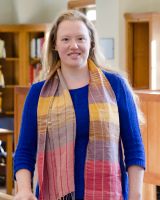
Kate Nyhan is a research and education librarian for public health at Cushing/Whitney Medical Library and a lecturer in environmental health sciences at Yale School of Public Health. She earned a post-master’s certificate as an interprofessional informationist at Simmons University School of Library and Information Sciences. As an information expert, she contributes to evidence synthesis and metaresearch projects. Her research interests include research waste, reproducibility, reporting, and the information behavior of the public health workforce.
Course Includes
- 4 Lessons
- Course Certificate