

Board of Directors Candidate
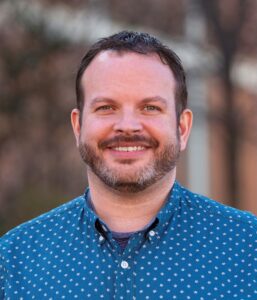
Ryan Harris
Associate Dean for Public Services, J. Murrey Atkins Library, University of North Carolina, Charlotte, 2022-present.
Previous Positions (last 10 years)
- Head of Research and Instructional Services, J. Murrey Atkins Library, University of North Carolina, Charlotte, NC, 2017-2022.
- Reference Services Manager, Research and Education Librarian, Health Science and Human Services Library, University of Maryland, Baltimore, MD, 2013-2017.
Official MLA Activities (last 10 years)
National
- Medical Library Association: member 2007-present.
- Joint MLA/AASHL Legislative Committee: member, 2023- present, cochair, 2024-present.
- Nominating Committee: member 2022-2023.
- 2023 National Programming Committee: Cochair 2020-2023.
- Virginia L. and William L. Beatty MLA Volunteer Services Award Jury: member 2019, chair 2020.
- MLA Reads Planning Group: member 2019-present.
- 2017 National Programming Committee: member 2015-2017.
- Membership Committee: member 2012-2016.
Caucus
- Academic Librarians: member, 2025-present
- 2014-2016, Educational, Media, and Technologies: member 2014-present; CE: chair 2014-2016.
- Leadership and Management: member 2014-present.
- Social Justice and Health Disparities: member 2014-present.
- LGBTQIA+: member 2014-present.
Chapter
- Southern/Mid-Atlantic Joint Meeting, Local Arrangements and Steering: cochair 2023-2024.
- Mid-Atlantic Chapter of the Medical Library Association: Membership Committee: chair 2019-2020: Nominating Committee: chair 2016.
Professional Experience (last 10 years)
Professional Activities
- ASERL Associate Dean/Associate University Librarian Leadership Group 2025-present
Professional Honors
- Medical Library Association: President’s Award, 2024.
- Medical Library Association Virginia L. and William K. Beatty Volunteer Service Award, 2022.
- Association of College and Research Libraries, Career Librarian Conference Scholarship, Association of College and Research Libraries, 2023.
Candidate Questions from the Nominating Committee
How can we (MLA) as an organization provide the maximum value to our members and provide opportunities for involvement and relevance in these changing times?
While MLA leadership has made improved strides in communication, there is still a significant opportunity to streamline communication and continue to improve how members connect. Navigating current activity can be challenging, making it difficult for members to network or engage with new caucuses and committees. While existing listservs remain valuable, implementing more centralized tools such as dedicated, single-point email addresses for each caucus could simplify outreach. This would allow both individuals and caucuses to have a clearer picture of MLA activities and would foster a more collaborative environment.
What would you, as a board member, do to help build community within our association and create an environment where members feel a sense of belonging?
To build a sense of community, my first priority is listening to our members to understand their varied and evolving needs. I would do this by engaging directly with members by attending caucus and committee programming, continued participation in MLA Reads, and advocating for dedicated listening sessions between leadership and the general membership. I will advocate at the board level for programming that supports lifelong learning and wellness, which I view as vital to fostering a sense of community among our members. This varied approach is essential because of our diverse membership. I recognize that a ‘one-size-fits-all’ approach will not work, especially as our members face unique institutional pressures in a constantly changing environment. I will champion our caucuses’ diverse values and initiatives. Supporting this work empowers our individual members to interact in meaningful ways and helps illustrate the true value of MLA membership.
What one strategic initiative do you think would be most helpful for ensuring that MLA remains a vibrant and useful association?
One area of opportunity I see is a renewed focus on both A.I. and health literacy, which I view as complementary. As A.I. expands in exciting yet challenging ways, we must equip students, faculty, researchers, patients, and community members with skills to effectively use and evaluate these tools. In our current environment, widespread health misinformation is being presented to the public, some of this by the federal government. We need to make sure that the diverse constituents we work with can critically assess information presented to them. This could be done in a few ways. In both cases, MLA members have the knowledge to address these issues. First and foremost, MLA should leverage the expertise of our members if we pursue this initiative. Some of the ways this could be done are through development of new CE courses, webinars, and conference programming. I would also like us to hear what challenges and questions our members are facing in these areas and try to make sure that whatever output we create helps to answer them.