

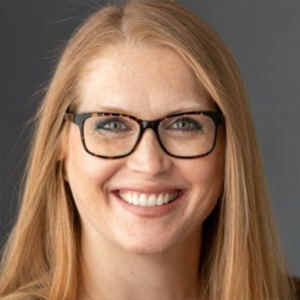
President-elect Candidate
Marie Ascher
Lillian Hetrick Huber Endowed Director, Phillip Capozzi, MD Library, New York Medical College, Valhalla, NY, 2014-present.
Previous Positions (last 15 years)
- Associate Director, User Support, Education, and Research (USER) Services, Health Sciences Library, New York Medical College, Valhalla, NY, employed since 2010.
- Head, Reference and Information Services, Health Sciences Library, New York Medical College, Valhalla, NY, Employed since 2001.
Education
- MPH, Urban Public Health) Hunter College, City University of New York, New York, NY, 2015.
- MS, Library and Information Science, Drexel University, Philadelphia, PA, 1993.
- BA, Art History, Sociology, Rutgers University, New Brunswick, NJ, 1990.
Official MLA Activities (last 15 years)
National
- Medical Library Association: member 1994-present;
- AI Imperative Task Force: member 2026-present;
- Board of Directors: member 2017-2020;
- Nominating Committee: member 2015-2016:
- Section Council, member 2015-2017.
Caucus
- Technology in Education: Liaison to the Education Domain Hub 2023-2024;
- Research: member, 1998-present; Research Agenda Committee: member 2008-present; Hypothesis Editorial Committee: member 2024-present; Systematic Review Project: facilitator 2013-2018; chair-elect/chair 2015-2017;
- Public Health/Health Administration: member 1995-2026; Nominating Committee: member 2024-2025, 2025-2026; Core Public Health Journals Project: chair 2011-2013; Research Committee: chair 2010-2023, member 2023-2026;
- Medical Informatics: Bylaws: chair 2006-2011, secretary/treasurer, 2011-2013;
- Public Services: member 2001-2026; Nominee to the Nominating Committee 2011;
- Leadership and Management: member 2012-present;
- Medical Informatics: member 1998-present.
Chapter
- Liberty Chapter: member 2023-present; Journal Club: convener, 2020-present; Programming Committee: member 2023; Professional Development Committee: member 2025-present.
- New York-New Jersey: member, 1994-2023; Membership & Recruitment Committee: member 2017; Programming Committee: member 2016, 2022; Nominating Committee: cochair 2012, Board member 2019-2021.
- Upstate New York and Ontario Chapter: member 2001-2020, Programming Committee: member 2011-2015; Nominee to the Nominating Committee 2012-2014; Member at Large 2012-2014.
Professional Experience (last 15 years)
Professional Activities
- I have been the Director of the library at New York Medical College since 2014, before which I was the Associate Director for USER Services, and prior to that, the Head of Reference at the same institution since 2001. Therefore, I have had the rare situation of moving up through the ranks at one institution for a long time. At my institution, I sit on the university’s senior leadership team and multiple strategic planning and accreditation groups, as well as oversee the direction and daily business of the library. In addition to my formal role, I have been involved with several extracurricular projects that are near and dear to my heart. First is the Critical Appraisal Institute for Librarians (CAIFL), which I founded and lead with the expert help of some very talented librarians. This seven-week course is designed to boost the ability of health sciences librarians to fully participate in evidence based practice instruction through a more in-depth ability to read, interpret, and critically appraise the medical literature. Second is participation in the Research Agenda Committee, which has run three Delphi studies over the last 15 years aimed at identifying the most important research questions facing our profession. We are currently in the process of setting up meetings to form collaborative research teams to address the questions posed by Research Agenda published in JMLA in January 2025. In addition to these areas, currently I’m interested in looking at best practices in the use of AI in information management, seeking, synthesis, and analysis, and the adequacy of education of health sciences librarians.
Professional Honors
- Lucretia McClure Excellence in Education Award, Medical Library Association, 2025
- Student Senate Citation of Excellence, School of Medicine Student Senate, New York Medical College, 2025
- Virginia L. and William K. Beatty MLA Volunteer Service Award, Medical Library Association, 2017
- Student Appreciation Award, School of Medicine Student Senate, New York Medical College, 2016
- Student Appreciation Award, School of Medicine Student Senate, New York Medical College, 2015
- AAHSL Leadership Scholarship, Harvard Leadership Institute for Academic Librarians, American Association of Health Sciences Libraries, 2014
- Katy Nesbit Award for Exemplary Service to the Chapter, Upstate New York and Ontario Chapter of the Medical Library Association, 2013
- Outstanding Contributions to Student Educational Programs Appreciation Award, New York Medical College, Office of Undergraduate Education, 2011
- Research Award, Second Place Poster, Medical Library Association, 2011
Publications (last 15 years)
- Ascher, M., Hoogland, M. A., Heskett, K., Holmes, H. N., & Eldredge, J. D. (2025). Making an impact: the new 2024 Medical Library Association research agenda. Journal of the Medical Library Association: JMLA, 113(1), 24–30. https://doi.org/10.5195/jmla.2025.1955.
- Jwa, S., Imanishi, Y., Ascher, M. T., & Dudley, M. Z. (2025). Communication interventions to reduce parental vaccine hesitancy: A systematic review. Vaccine, 61, 127401. https://doi.org/10.1016/j.vaccine.2025.127401.
- Boden, C., Ascher, M. T., & Eldredge, J. (2018). Learning While Doing: Program Evaluation of the Medical Library Association Systematic Review Project. Journal of the Medical Library Association, 106 (3): 284-293. https://doi.org/10.5195/jmla.2018.286.
- Ascher, M.T. & Eldredge, J.D. (2017). MLA Research Section’s Research Agenda Committee Systematic Review Project: a status report. Hypothesis: 29(1): 5-17.
- Eldredge, J. D., Ascher, M. T., & Holmes, H. N. (2015). An innovative model of evidence-based practice for other professions. Journal of the Medical Library Association: JMLA, 103(2), 100-102. doi:10.3163/1536-5050.103.2.009.
- Eldredge, J. D., Holmes, H. N., & Ascher, M. T. (2015). Moving the EBLIP community’s research Agenda Forward. Evidence Based Library & Information Practice, 10(2), 170-173.
- Ascher, M.T. (2014). Reference and Information Services. In: Wood, M. S. (ed.). Health Sciences Librarianship. Lanham, MD: Rowman & Littlefield.
- Harris, M.R., Holmes, H.N., Ascher, M.T., Eldredge, J.D. (2013). Inventory of Research Questions Identified by the 2011 MLA Research Agenda Delphi Study. Hypothesis: 24(2): 5-16.
- Eldredge, J.D., Ascher, M.T., Holmes, H., Harris, M.R. (2012). The New Medical Library Association Research Agenda: Final Results from a Three-Phase Delphi Study. Journal of the Medical Library Association, 100(3): 214–218. doi: 10.3163/1536-5050.100.3.012
- Rosario, J., Ascher, M.T., Cunningham, D.J. (2012). A Study in Usability: Redesigning a Health Sciences Library’s Mobile Site. Medical Reference Services Quarterly, 31 (1): 1-13.
Candidate Questions from the Nominating Committee
What do you see as the biggest challenge facing MLA, and how would you work with the board and members to address it?
One of the most significant challenges facing MLA continues to be a long-term decline in membership. This reflects a broader shift in how younger professionals build community and find value, often outside of traditional associations. For MLA to thrive, we must demonstrate a compelling reason to belong.
If elected President, I would work closely with the Board to strengthen recruitment and retention by clearly articulating MLA’s value, amplifying the work of our caucuses and communities, and exploring the possibility of more flexible membership structures, including micro credentials and tiered engagement options. Our future depends on creating meaningful, relevant experiences that connect members to one another and to MLA’s mission.
How can we as an organization provide the maximum value to our members and seek opportunities for engagement, advocacy, and relevance in these changing times?
MLA’s strength is its members, and much of our engagement happens within MLA caucuses and committees. These communities foster connection, leadership development, and professional identity. I believe they will remain central to MLA’s relevance.
To maximize member value, we should review the recently published JMLA article evaluating how the 2019 caucus changes have shaped engagement — identifying where support is strong and where new strategies could enhance participation and leadership pathways. At the same time, we must reinforce MLA’s advocacy voice by equipping members with tools that highlight their impact in healthcare, research, and education. Members who stay engaged see MLA as both a professional home and an advocate for the profession. Strengthening that reciprocal relationship is essential.
How would you, as a leader for MLA, work with the incoming new Executive Director to help shape the strategic vision of the Association?
A strong partnership between the MLA President, the Board, and our new Executive Director, Katrina Holland, will be crucial for shaping MLA’s future. To this end, I would recommend a structured, year-long onboarding plan that includes a review of strategic and operational priorities, financial and membership trends, and programmatic goals. Just as importantly, we should create intentional opportunities for listening — to staff, volunteer leaders, and members — to build a shared understanding of MLA’s culture and aspirations.
My leadership style centers on collaboration, transparency, and open communication. Regular check-ins and feedback loops will help ensure alignment as we co-create a strategic vision that honors MLA’s legacy while positioning us for future growth.
Describe one suggestion you have to engage people new to the profession and/or to MLA?
One impactful way to engage new professionals is to offer regular small-group orientation sessions. Building on the success of Colleague Connection, these sessions would include a mentor to guide newcomers through MLA, to demonstrate how we are organized, and identify pathways to involvement and leadership.
For many, joining MLA can feel overwhelming; a welcoming, structured introduction can help new members quickly find their place, build relationships, and feel connected to our community, laying the foundation for long term engagement.